Nothing to Prove
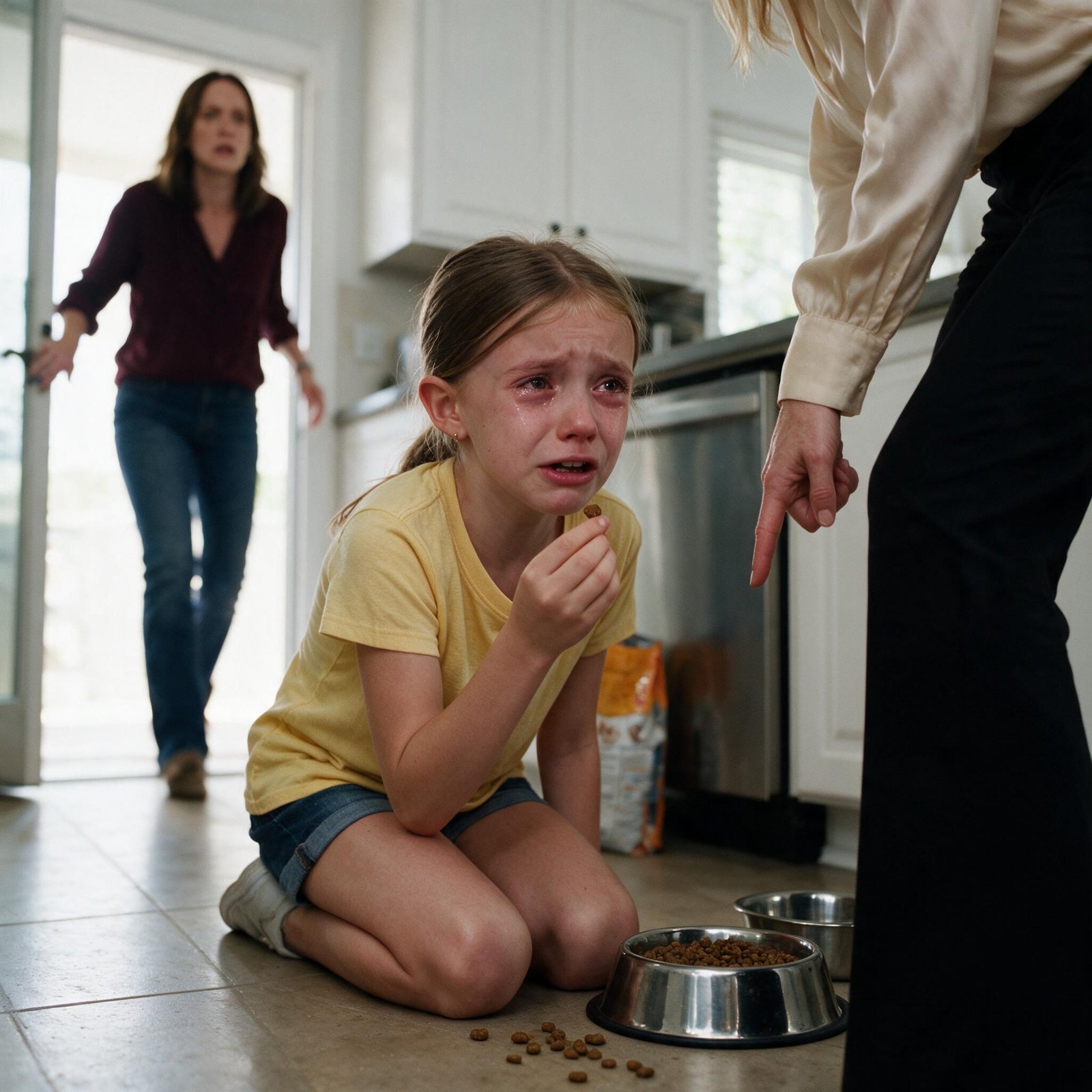
“—me or the adult standing beside him?”
That was how Lily had finished the question.
Nine months later, the final parenting and safety order answered that question with boundaries rather than promises.
Lily remained in Emma's care.
Vanessa could not contact her directly, approach her at school or exchanges, send gifts or messages through another person, or attend Daniel's parenting time.
Daniel's contact remained professionally supervised.
Any request to change it would require a new safety review, input from Lily's clinician and advocate, and evidence that he could respond to his daughter without cross-examining her or asking her to manage his guilt.
Living separately from Vanessa did not prove that change.
Finishing a parenting class did not prove it either.
Those choices were responsibilities Daniel owed, not credits he could trade for access.
The court did not order Lily to read his apology, accept a visit, or forgive him.
Her first supervised session lasted seventeen minutes because that was when she asked to leave.
Daniel had begun with a speech he had practiced with his therapist.
The supervisor stopped him after the second explanation and reminded him that an apology did not need a defense.
Daniel tried again.
He told Lily that she had spoken clearly on Tuesday and that he had chosen not to act.
He said the apology she had been forced to give Vanessa belonged to him instead.
Then he stopped talking.
Lily did not comfort him.
She did not say she forgave him.
She asked to go home, and Daniel accepted the end of the session without bargaining.
At later sessions, they sometimes worked on puzzles while the supervisor remained nearby.
Some weeks Lily chose not to attend at all.
Daniel accepted each refusal through the supervisor and did not ask Emma to persuade her.
That was not redemption.
It was the beginning of his learning that hearing a child mattered most when her answer was inconvenient.
Lily's work happened far from the hearing room.
Her pediatric team monitored her hydration, growth, and eating without making her body another thing she had to defend.
Her clinician helped her identify hunger before it became panic and separate a present need from the memory of Vanessa's shoes near the kitchen.
For several weeks, Lily hid crackers beneath her pillow and in the front pocket of her backpack.
Emma did not confiscate them or demand a promise that the hiding would stop.
She replaced stale packets, kept water within reach, and let consistency make the hiding unnecessary over time.
Together with Lily's clinician, Emma and Lily built a low snack shelf in the kitchen.
Lily chose blue star stickers for its edge and helped fill clear bins with crackers, dried fruit, applesauce, and cereal bars.
Nothing on the shelf had to be earned through chores or saved for a scheduled hour.
Lily could ask for something different, take what was available, or decide she was not hungry after all.
On difficult days, she still stood near the shelf without touching anything.
Emma would remain close enough to be found and far enough not to turn the choice into a test.
One afternoon after school, rain tapped softly against the kitchen window while Lily dropped her backpack beside the counter.
She had eaten lunch, then spent recess running and walked home from the bus stop.
Nine months earlier, she might have counted the time until dinner and tried to make her stomach quiet.
This time she looked at Emma.
“Mom, I’m hungry.”
Emma set down the mail in her hand.
“Okay.”
Lily crossed to the low shelf and chose an apple and a packet of crackers.
She did not glance over her shoulder before opening them.
No one asked whether she had already eaten.
No one asked whether she deserved more.
No one asked her to make her hunger sound reasonable or to prove she was telling the truth.
In that house, hunger was a need, not a case she had to prove.
Part 5 of 5 · She Said You Wouldn't Believe Me